A Step-by-Step Guide to Long-Term Social Media Content Planning
Feb 20, 2026
8 min
Building a sustainable online presence requires strategic planning, which is why a structured approach to social media is essential for your business success. It ensures every piece of content connects back to your long-term content goals rather than chasing short-term attention.
This approach involves selecting 3-5 core themes that align with your business goals, then mapping them across a 90-day calendar that balances 40% original content, 60% curated material, and 10-20% promotional material. We recommend batching content during 2-3 hour weekly production sprints to create 7-10 posts at once, queued in advance using a social media scheduling tool.
Track engagement rates and conversions monthly to refine your strategy based on performance data. Below, we'll walk you through each step to build your extensive roadmap. Contact LevelUp Society & Co. in Miami, FL today to transform your Miami Social Media strategy into a powerful growth engine for your business.
Key Takeaways
Select 3-5 focused content themes aligned with brand expertise and map each to specific marketing objectives for strategic tracking.
Create a 90-day calendar by dividing into weekly themes, blocking major events, and mapping content creation sessions in advance.
Balance content mix with 40% original material, 60% curated content, and 10-20% promotional updates to maintain audience value.
Batch-produce social content in 2-3 hour weekly sprints using automation tools to generate 7-10 pieces efficiently and consistently.
Monitor engagement rates, reach, and conversions monthly, conducting quarterly KPI reviews and A/B testing to refine strategy effectiveness.
Long-Term vs. Weekly Planning: What Changes at 90 Days?
When you're building a long-term social media content planning, the difference between committing to 90 days versus one week at a time fundamentally changes how your content performs.
Long-term strategy lets you establish content pillars that guide every post, ensuring your brand message stays consistent across all social media campaigns. A cohesive social strategy is what separates growing brands from those that simply post. A week-to-week approach, while flexible, often leads to reactive posting that doesn't build toward larger long-term goals.
At the 90-day mark, your content strategy shifts from scattered posts to a cohesive narrative. You'll batch content in advance, reducing last-minute scrambles and improving team collaboration.
Data shows brands using long-term planning see 40% better consistency, directly impacting brand loyalty and engagement rates. Weekly approaches might capture trending moments, but they sacrifice the strategic depth that drives sustained audience engagement.
When you commit to quarterly planning, you're investing in content that works together, not just individual pieces competing for attention.
Choose Your Core Content Themes for Long-Term Planning
How do you guarantee your 90-day content calendar actually builds momentum instead of just filling empty posting slots? Start by taking time to set goals, then establish core content themes that align directly with your marketing objectives and business goals.
Start by selecting 3-5 focused themes that reflect your brand's expertise. These themes become the foundation for all social media channels, preventing content dilution while deepening your connection with followers across all platforms.
For example, a fitness brand might choose nutrition education, workout tutorials, success stories, wellness tips, and product features.
Next, map each theme to specific marketing objectives. Track performance analytics monthly to identify which themes resonate strongest with your audience across different platforms.
We recommend adjusting your content strategy based on these metrics rather than personal preferences.
Finally, weave seasonal events into your established themes to maintain freshness without losing your marketing focus. This approach guarantees every post serves a purpose while building recognizable patterns that deepen audience connection over time.
Map Your 90-Day Social Media Campaign and Set Goals
Strategic calendar mapping transforms scattered posting efforts into coordinated campaigns that compound results across your entire quarter.
We'll show you how to build a social media content calendar that aligns with your marketing goals and keeps your audience engaged consistently.
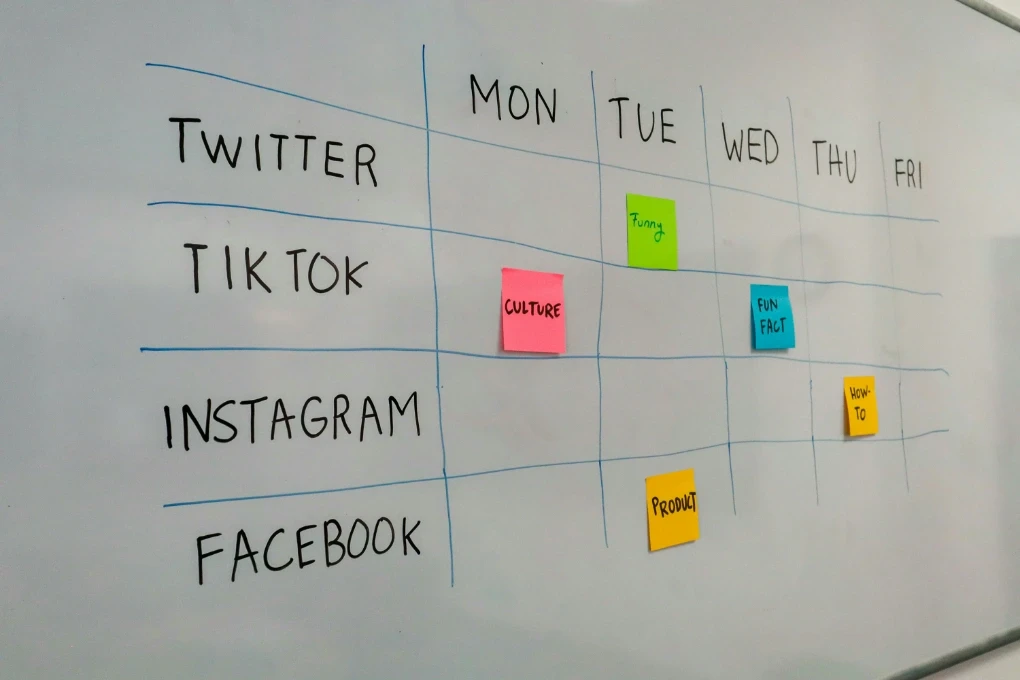
Start by dividing your 90 days into weekly themes that support your broader objectives. Block out major holidays, product launches, and industry events first.
Then schedule your content creation sessions, allocating time for both original posts and curated material from trusted sources.
Use spreadsheet tools or dedicated platforms to organize posting dates, platforms, content types, and key messages. Note any proposed content formats or creative directions alongside each scheduled item so your team is aligned before production begins. Include columns for tracking engagement metrics so you can measure the effectiveness of different social media strategies.
Review your calendar weekly, adjusting based on what resonates with your audience. This flexibility guarantees you're not locked into ineffective approaches for your social media channels.
Your calendar becomes a living document that evolves with your community's preferences and the unique demands of each platform.
Balance Original, Curated, and Promotional Content
We've built your 90-day content plan, and now we'll help you determine what type of content fills those slots most effectively.
The proven 40% original, 60% curated split gives you a framework that balances your brand's unique voice with valuable third-party perspectives your audience wants to see.
Let's explore how to find this ideal mix and locate high-quality curated content that resonates with your followers.
Optimal Content Mix Ratios
When you're building a social media presence that truly connects with your audience, finding the right balance between what you create, what you share, and what you sell becomes critical to your success. We recommend following these ideal content mix ratios to strengthen your content marketing strategy and boost engagement rate while building brand awareness.
Content Type | Recommended Percentage |
|---|---|
Original Content | 40% |
Curated Content | 60% |
Promotional Content | 10-20% (within mix) |
Your original content establishes authority and showcases creativity, while curated content builds trust through relevant industry insights. Keep promotional content limited to maintain value-focused communication. Tools like social media listening platforms help discover quality curated content matching audience interests. Regular performance assessment allows you to adjust ratios, enhancing your social media marketing approach for maximum effectiveness.
Finding Quality Curated Posts
Finding curated content that genuinely resonates with your audience requires a systematic approach to source identification and quality evaluation.
We've found that developing a reliable process for discovering quality curated posts strengthens your overall social media marketing while maintaining brand credibility.
Here's how to locate valuable curated content for your target audience:
Monitor industry publications and thought leaders whose expertise aligns with your brand's themes and values.
Use listening tools to identify trending topics and high-performing content within your niche.
Track engagement metrics on previously shared curated content to refine your source selection.
Create a curated content library of trusted sources that consistently deliver value to your audience.
This systematic approach guarantees your curated content drives meaningful engagement while positioning you as a trusted industry resource.
Batch Your Social Content in Weekly Production Sprints
Because most content creators struggle with the daily scramble to produce fresh posts, batching your social content in weekly production sprints offers a smarter alternative. Instead of creating content piecemeal each day, we recommend dedicating 2-3 hours weekly to produce multiple pieces in one focused session.
This content process works because consecutive work on similar tasks enhances your creative flow and maintains thematic consistency. Dedicated production windows can help improve your focus and minimize the distractions that fragment daily posting efforts. You'll find it easier to generate ideas when you're already in the right mindset.
Using a social media calendar template and scheduling platform, you can queue everything at once and guarantee your content keeps flowing throughout the week.
Organizing your social media this way eliminates last-minute stress and writer's block. You'll have time to create quality posts that align with upcoming events and trends.
For social media marketing success, batch production typically generates 7-10 updates per sprint, giving you consistent coverage while freeing up daily time for engagement and analytics.
Schedule Your Long-Term Social Media Calendar in Advance
How far ahead should you plan ahead? We recommend building your social media calendar at least 90 days in advance to maintain consistent engagement and align posts with your marketing goals.
This structured approach helps you identify content gaps early and guarantees you're never scrambling for last-minute content.
Here's how to schedule your long-term calendar effectively:
Map major events and campaigns – Block out holidays, product launches, and seasonal promotions first.
Use content management tools – Platforms like Sprout Social enable bulk uploads across multiple social media channels simultaneously, simplifying media management at scale.
Balance your content mix – Schedule both original and curated material that resonates with your audience.
Review performance metrics monthly – Adjust your calendar based on what's working and what isn't.
Track Performance and Adjust Your Content Calendar
Once we've scheduled our content calendar, we need to track how our posts perform and make adjustments based on real data.
We'll monitor key performance metrics like engagement rates, reach, and conversions to understand what's working and what isn't — and pull a monthly report to keep stakeholders informed.
Monitor Key Performance Metrics
Without consistent monitoring of your social media performance metrics, you're fundamentally creating content in the dark and hoping it connects with your audience.
We need systematic tracking to understand what's working and where adjustments are necessary. Key performance metrics provide the objective data your overall strategy requires for continuous improvement.
Here's what we recommend monitoring:
Engagement rates – Track likes, comments, shares, and saves to measure audience interaction.
Reach and impressions – Understand how many people see your content.
Conversion metrics – Monitor click-throughs, sign-ups, and purchases resulting from posts.
Follower growth – Measure audience expansion over specific time periods.
Use analytics tools like Google Analytics to track performance efficiently across all social media platforms.
These platforms consolidate data, making it easier to identify shifts and make informed decisions about your content.
Analyze Content Success Patterns
After you've collected performance data from your social media channels, the real strategic work begins with pattern analysis.
We recommend you analyze performance systematically by comparing similar content types across different timeframes. Track KPIs like engagement rates and conversions to identify which formats consistently resonate with your audience behavior patterns.
Marketing teams should look for recurring themes in high-performing posts—perhaps video tutorials outperform static images, or Tuesday morning posts generate better reach than Friday afternoons. This pattern recognition helps you refine strategies effectively.
Review your past campaigns quarterly to spot emerging patterns in your social media marketing performance. When you understand what works, you'll develop a stronger social media strategy that allocates resources toward proven formats while testing new approaches strategically.
Refine Strategy Based Data
Understanding patterns in your content performance creates the foundation, but transforming those insights into strategic action determines your long-term success.
We'll refine strategy based data through these essential steps:
Monitor KPIs quarterly to track engagement rates, reach, and conversion metrics that align with your marketing objectives.
Conduct A/B testing on different content formats and messaging to identify what resonates with your audience behavior patterns.
Use analytics tools like Google Analytics to gather actionable insights about your social media marketing performance across platforms.
Practice social listening by collecting audience feedback through surveys and monitoring conversations with Hootsuite to adjust your overall marketing approach.
Set specific benchmarks for each metric you're tracking.
When engagement rates drop or audience behavior shifts, you'll have clear data indicating exactly where adjustments are needed in your overall strategy.
Ready to stop posting reactively and start building a social media presence that compounds? LevelUp Society & Co. turns long-term strategy into real business growth. Contact us today and let's build your 90-day content plan together.